GeneSACS
Clinical genomics and molecular diagnostics workflow system that manages the complete Patient → Case → Specimen → Genomic Study → Variant → Evidence → Interpretation → Report process in a unified, structured and traceable environment.
What problem does it solve?
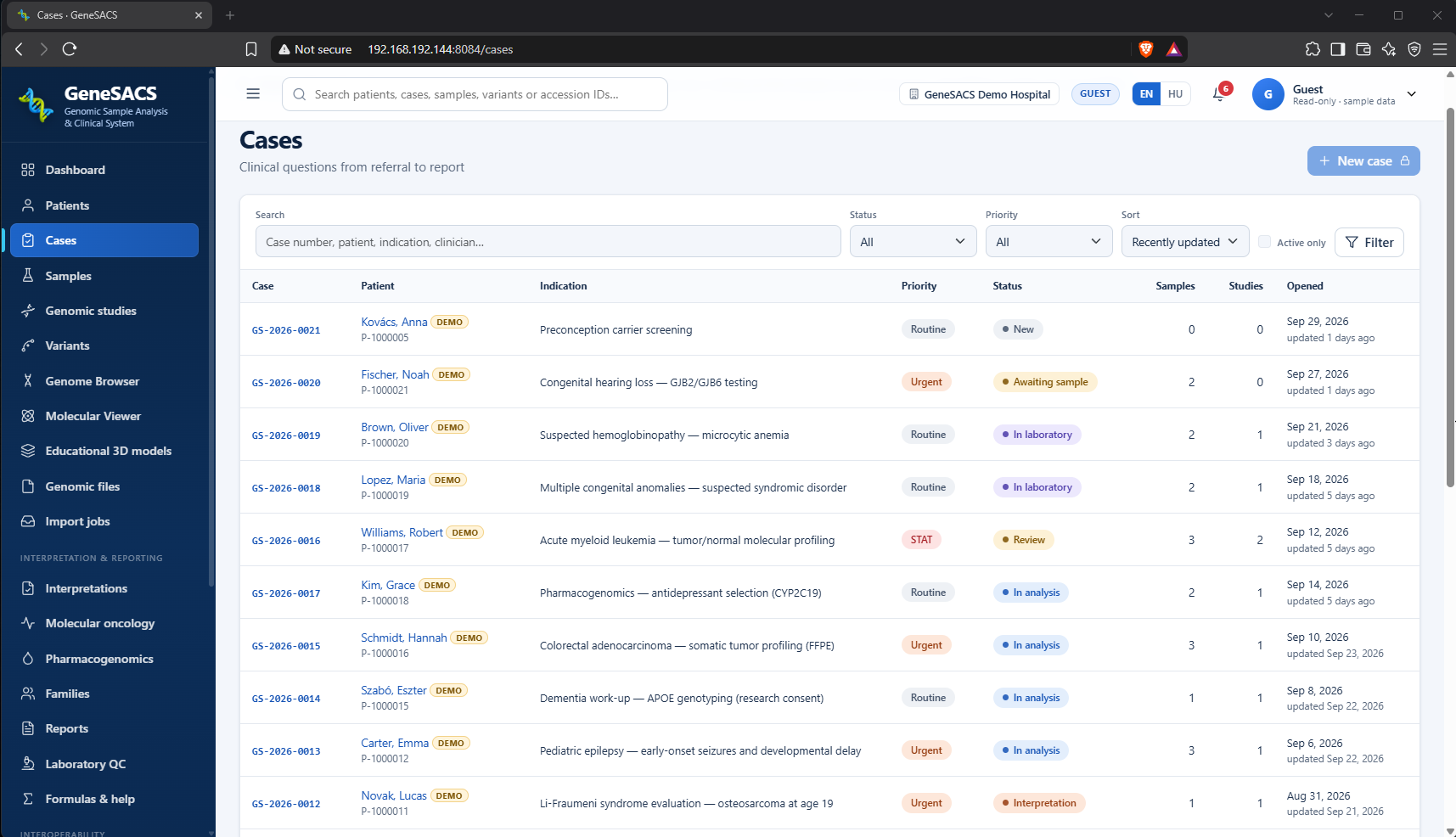
Clinical genomics and molecular diagnostics workflows often involve patient data, cases, specimens, genomic studies, variants, evidence, interpretations and reports spread across separate data sources and processes. GeneSACS brings these elements into a single workflow so the diagnostic process can be managed in a structured, auditable and centrally traceable way.
Key features
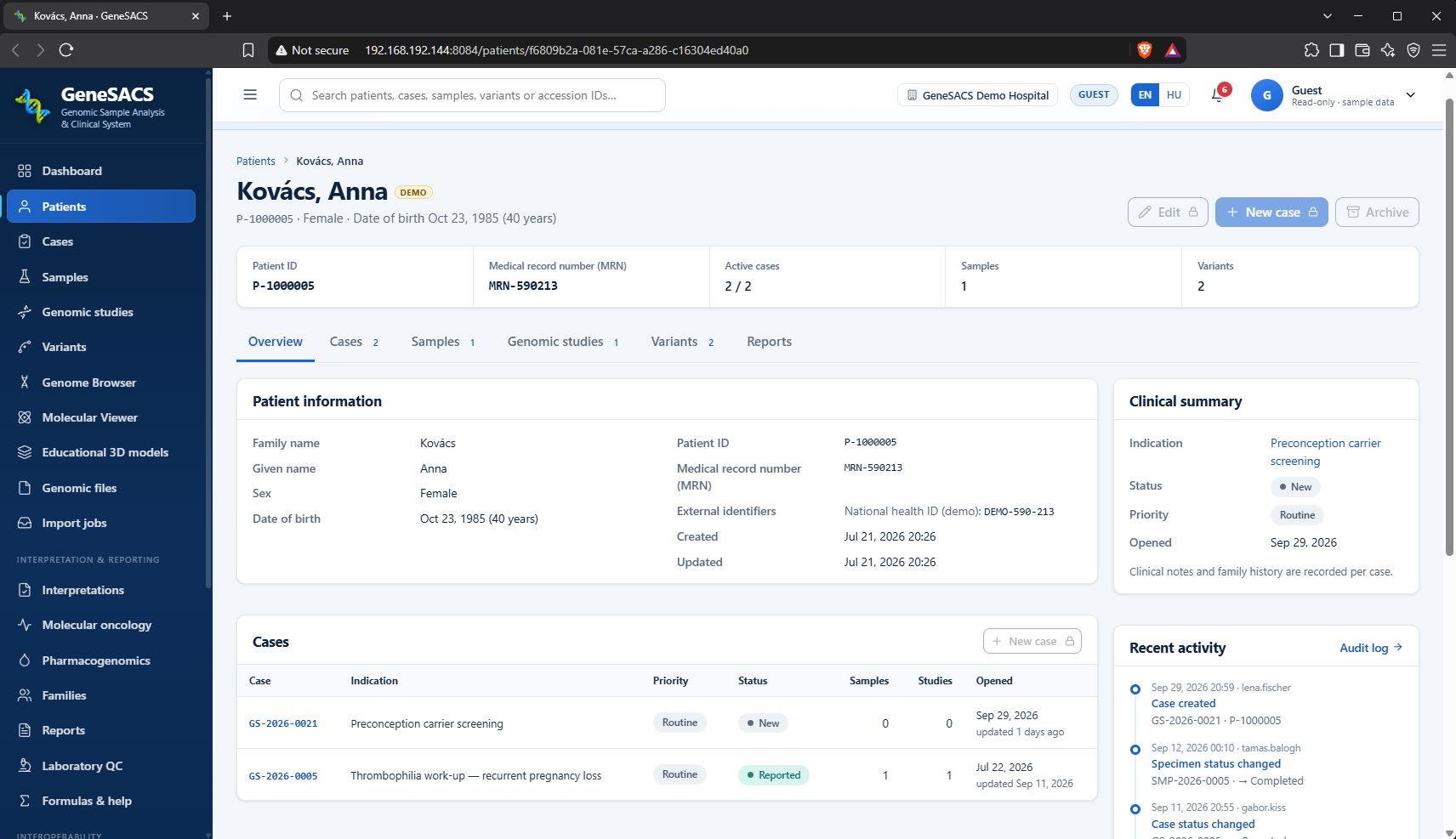
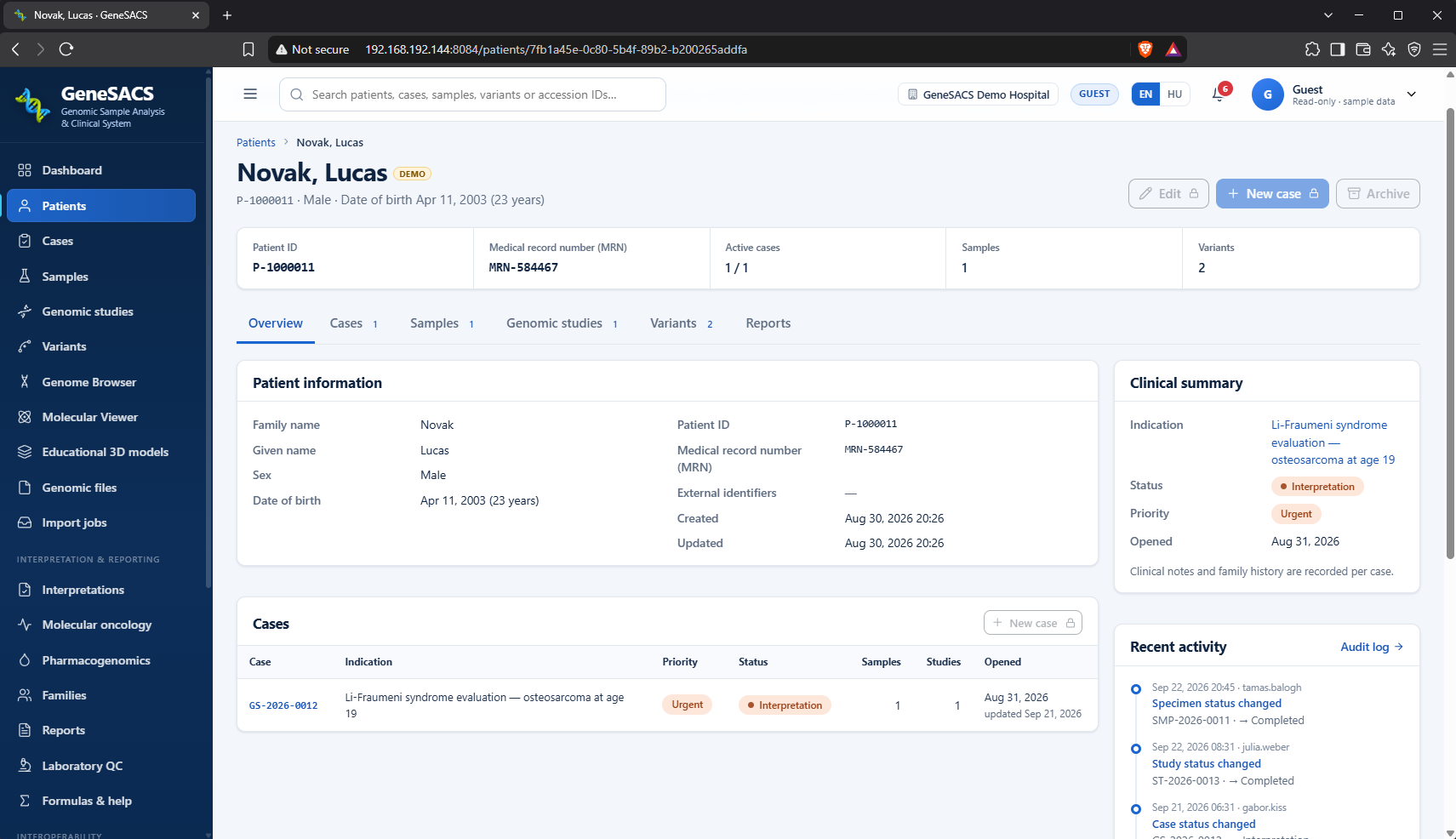
- Structured management of Patient, Case and Specimen data
- Genomic Study workflows and genomic file management
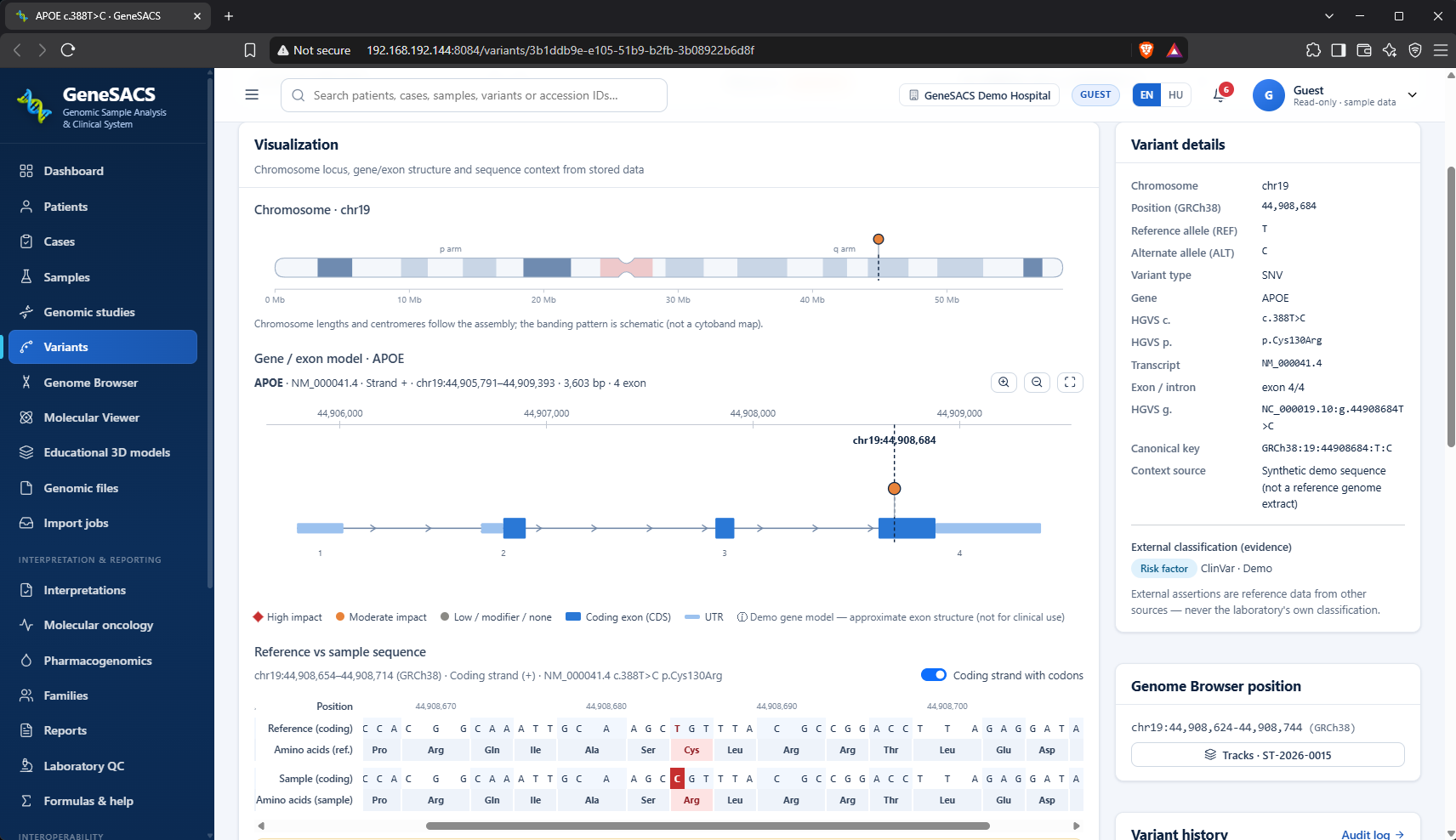
- Variant, evidence and clinical interpretation management
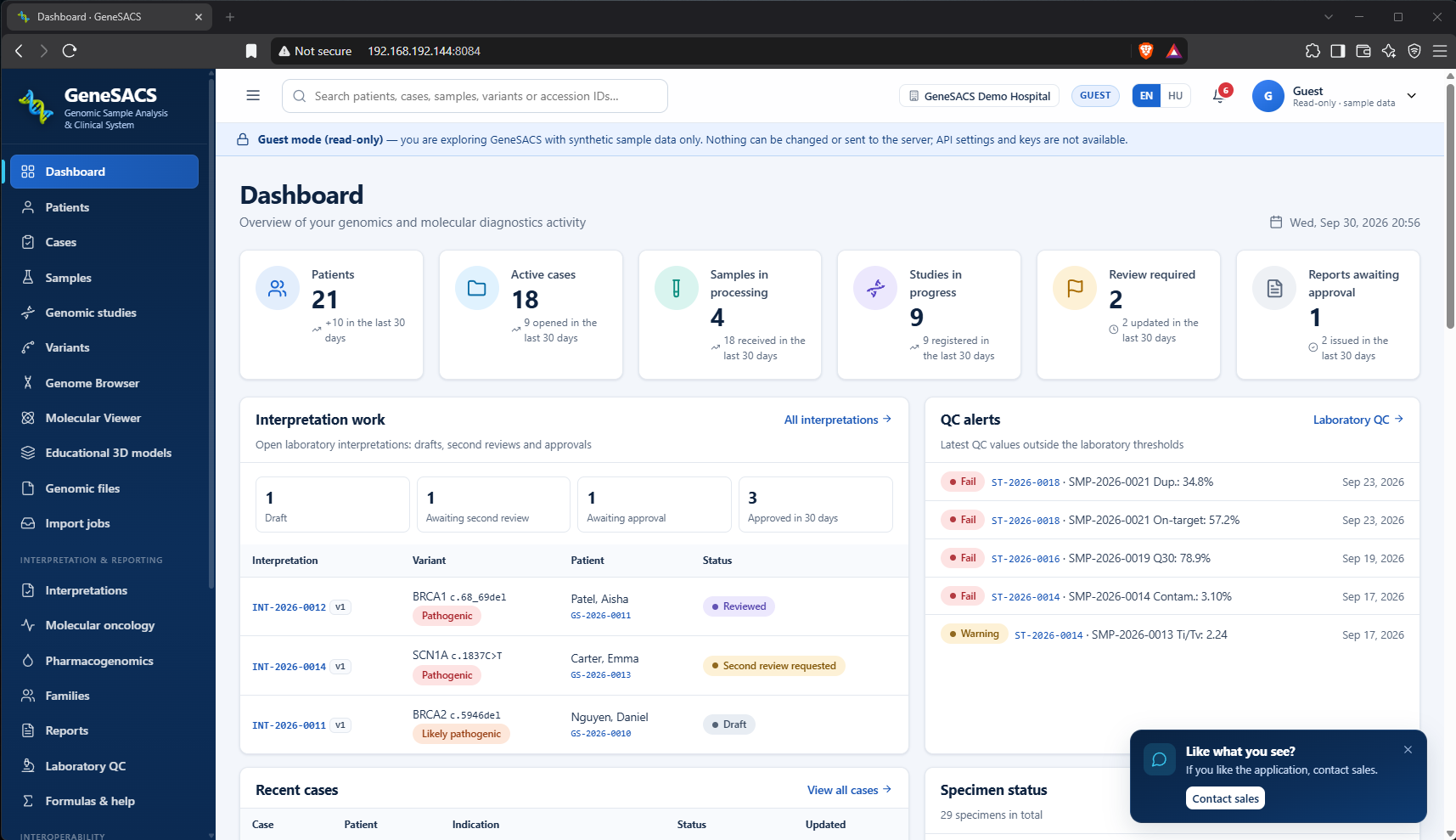
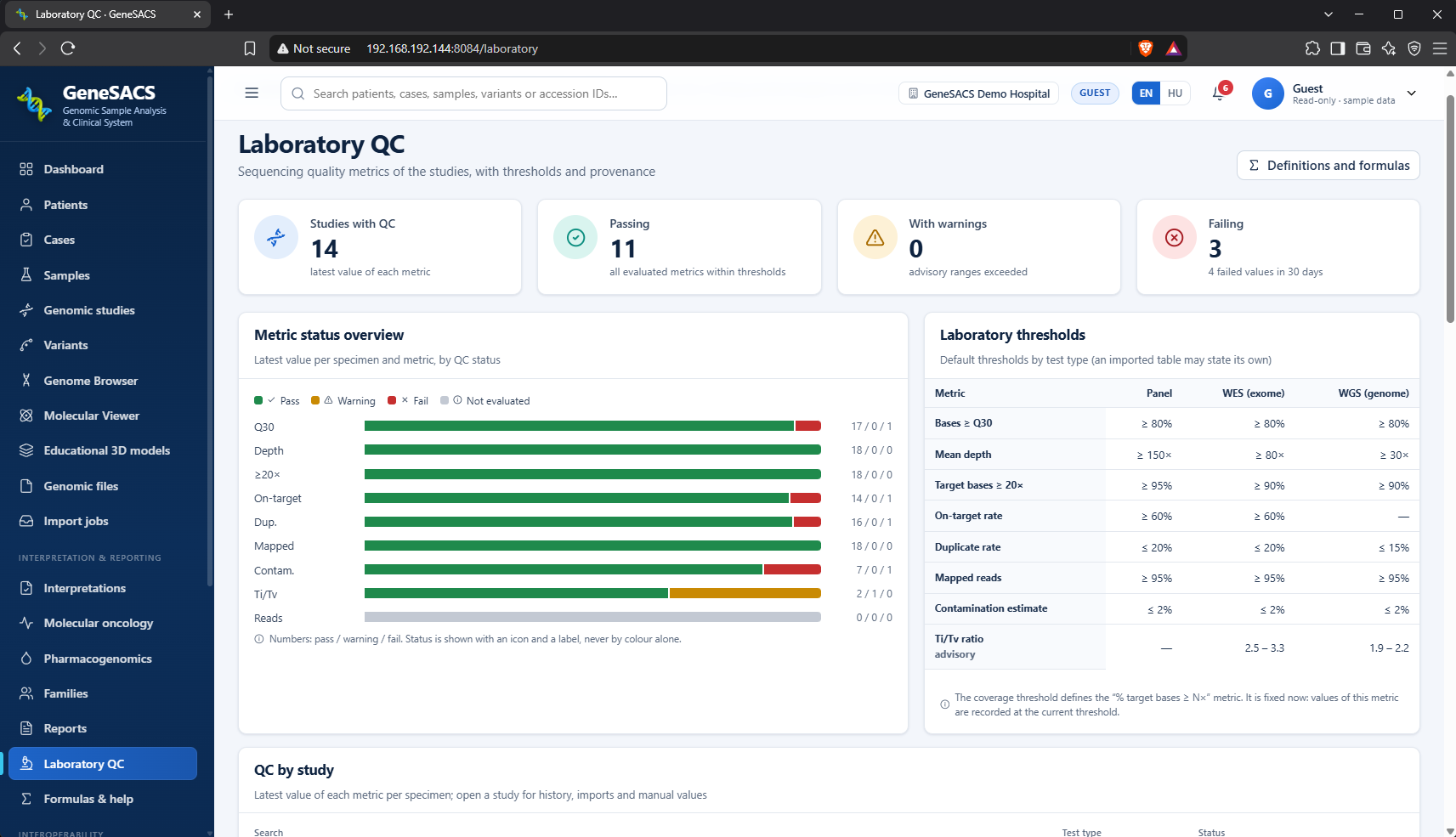
- QC, reporting and diagnostic workflow support
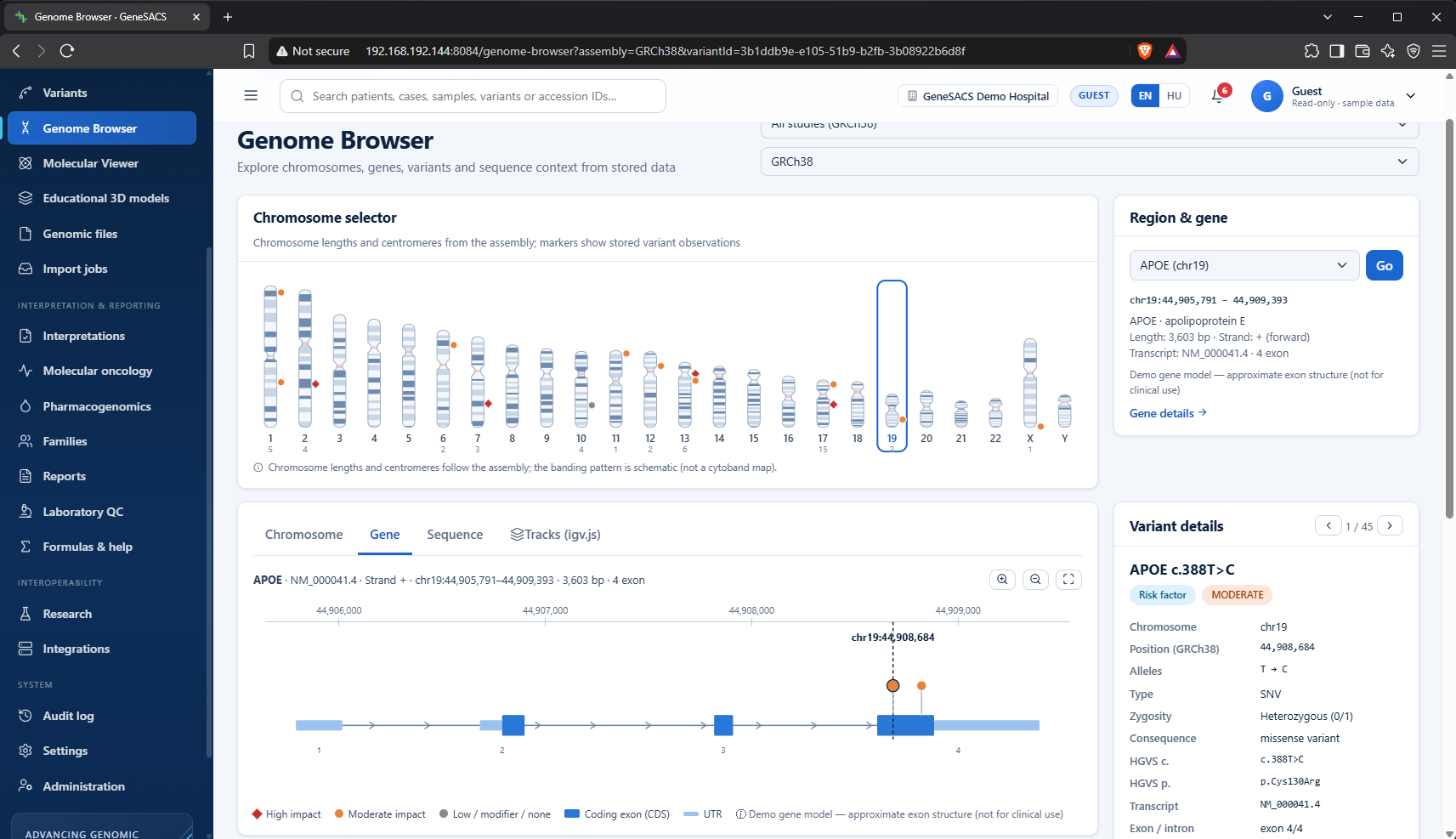
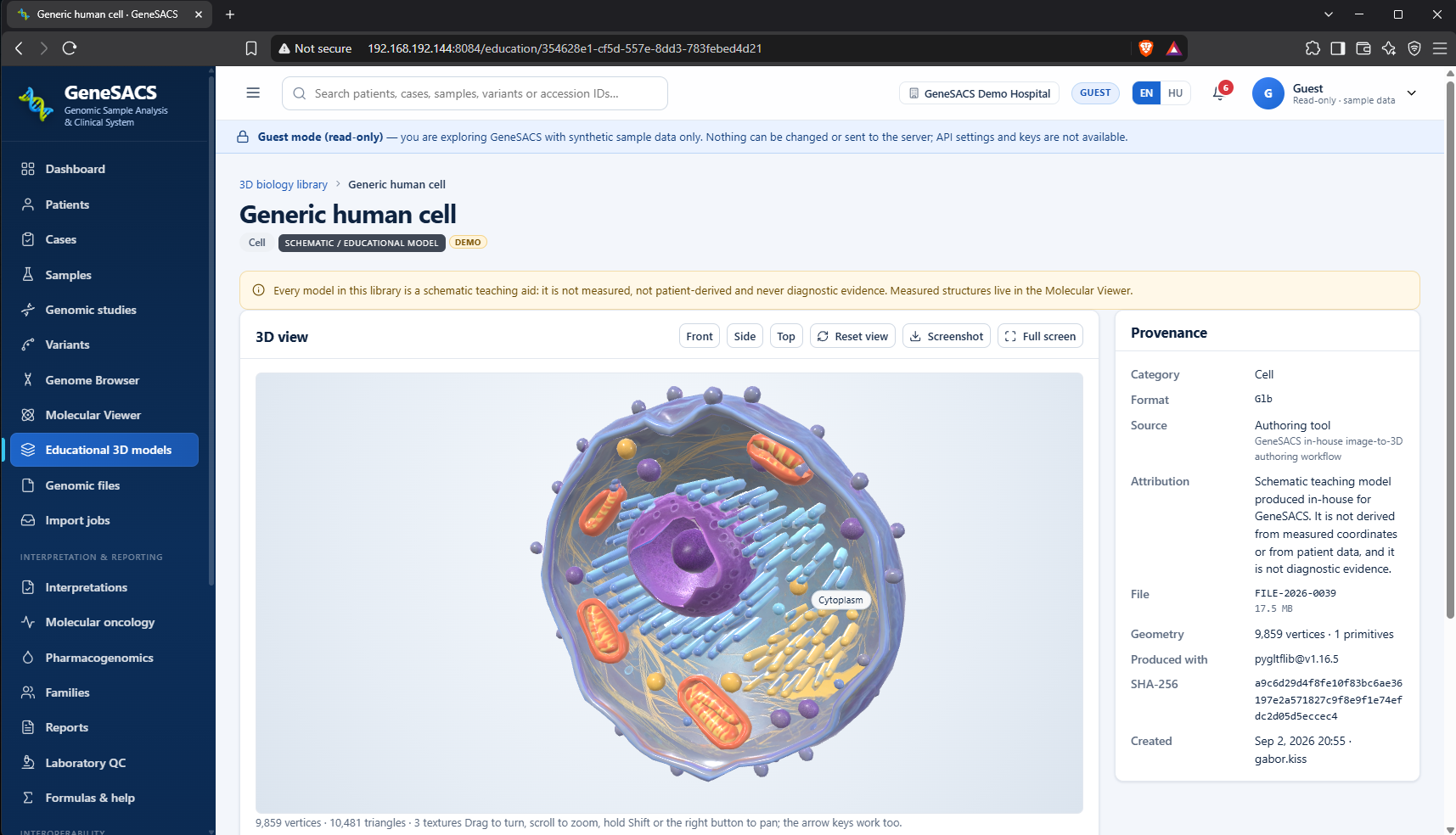
- Genome Browser and molecular visualisation features
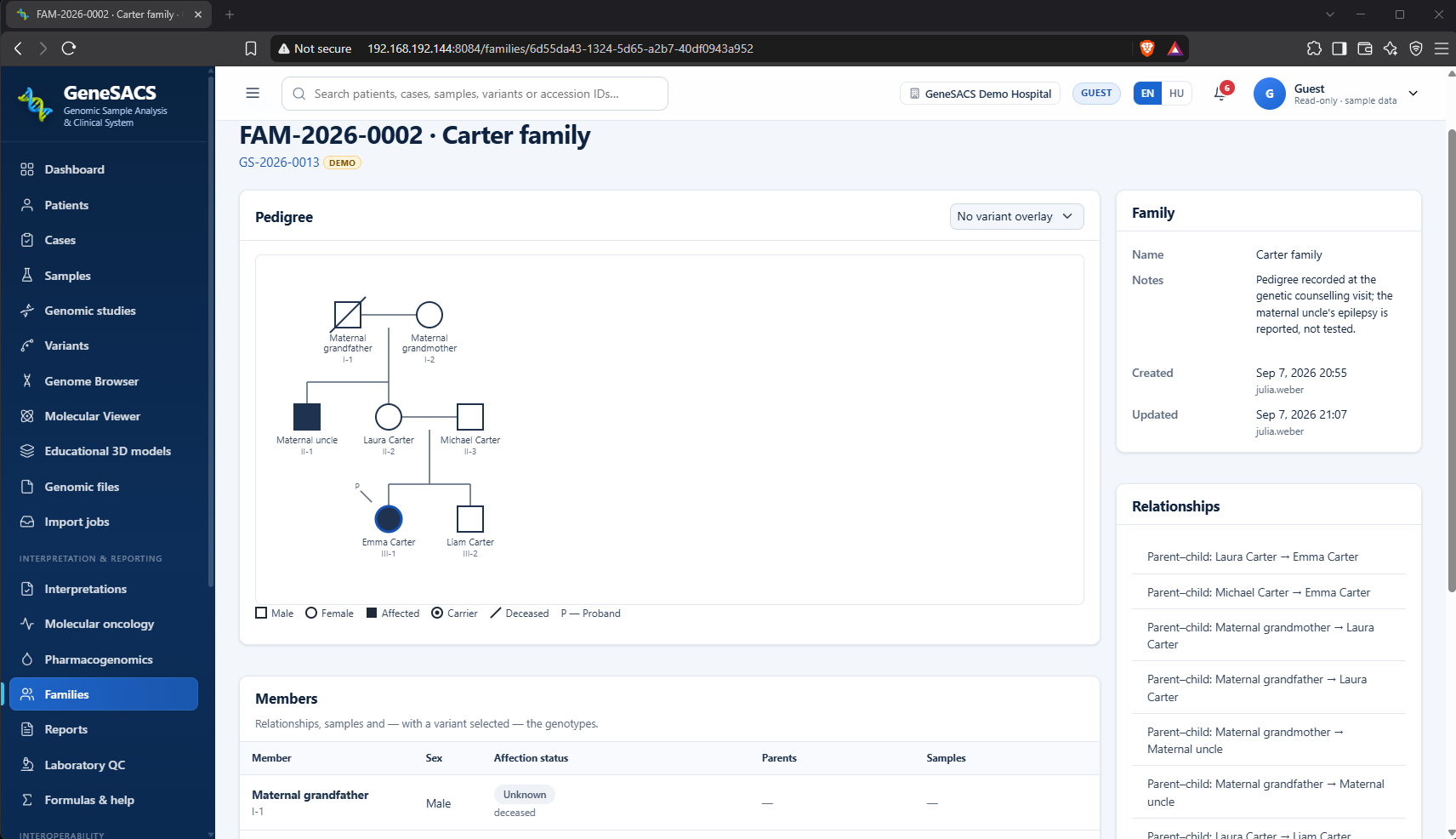
- Pedigree / Trio, Oncology and Pharmacogenomics modules
- Role-based user management and auditable user actions
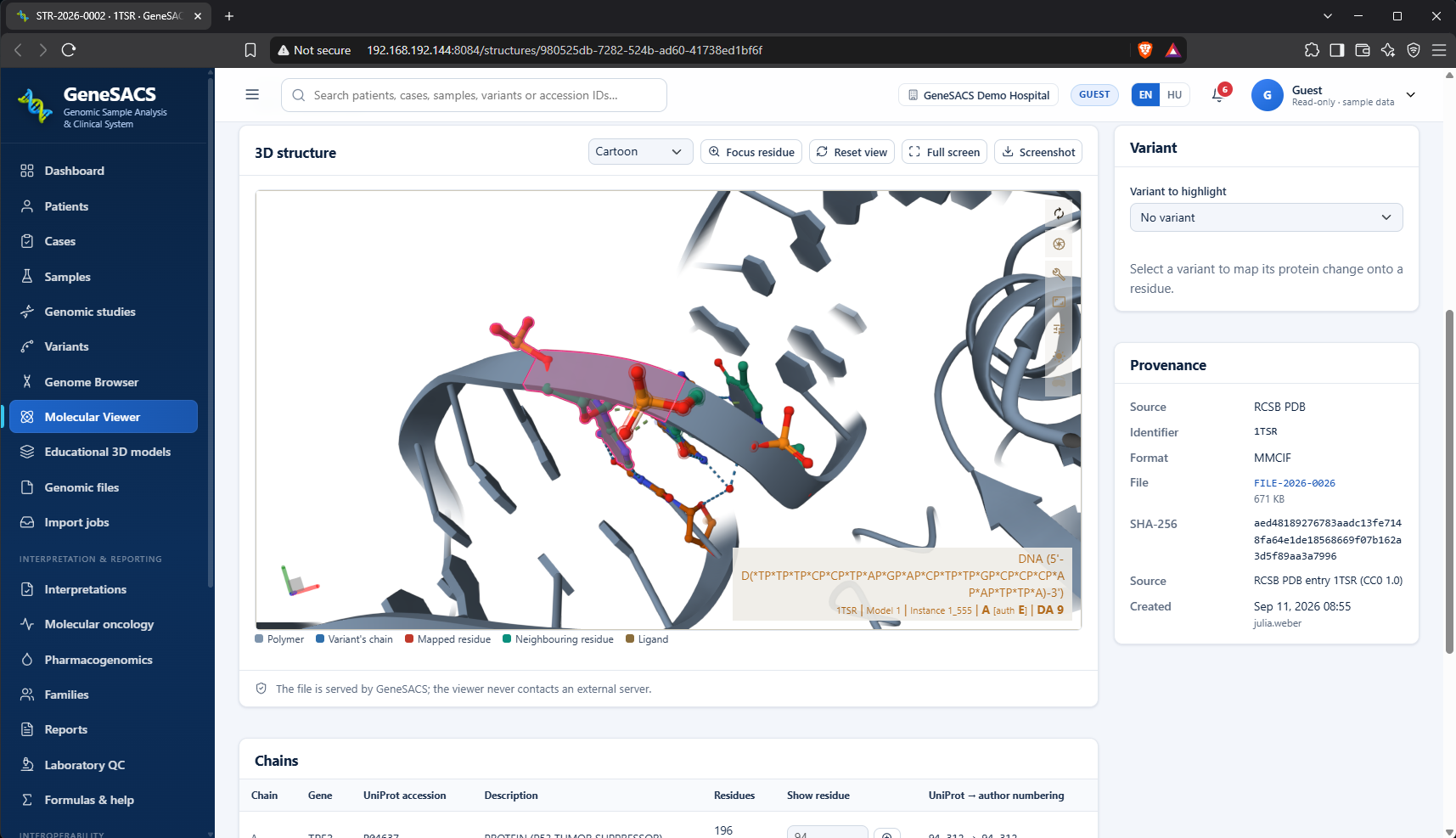
Click the image to view it in a larger size.
Technology stack
| Frontend | ASP.NET Core web interface with JavaScript-based genomic and molecular visualisation components |
|---|---|
| Backend | C# / ASP.NET Core, modular monolith architecture and application API |
| Data access | Entity Framework Core / Npgsql |
| Database | PostgreSQL for structured clinical and genomic data and persistent binary file storage |
| File handling | FileAsset / FileAssetChunk-based chunked storage in PostgreSQL; VCF/VCF.gz, BAM, CRAM, BAI/CRAI, FASTA, FASTQ, BED, FHIR JSON, PDB/mmCIF |
| Visualisation | IGV.js, Mol*, SVG / KaTeX-based scientific and molecular visualisation |
| Authorization | Simple RBAC with Administrator and HospitalUser roles and auditable user actions |
How it works
The core workflow follows the Patient → Case → Specimen → Genomic Study → Variant → Evidence → Interpretation → Report chain. Clinical staff associate specimens and genomic studies with patient cases, after which genomic files, variants, QC results, evidence and interpretations are connected to the same workflow. The result can then be produced as a structured diagnostic report.
Engineering focus
Major engineering challenges include modelling complex clinical and genomic relationships, storing large binary files in chunked form inside PostgreSQL, maintaining consistent workflow states, and integrating genomic visualisation and background-processing components into one cohesive web application.
Screenshots