BlockSniff
Blockchain investigator web application for analysing Bitcoin and Ethereum addresses, transactions and fund-flow paths by bringing external blockchain data sources and entity labels into a unified investigation interface.
What problem does it solve?
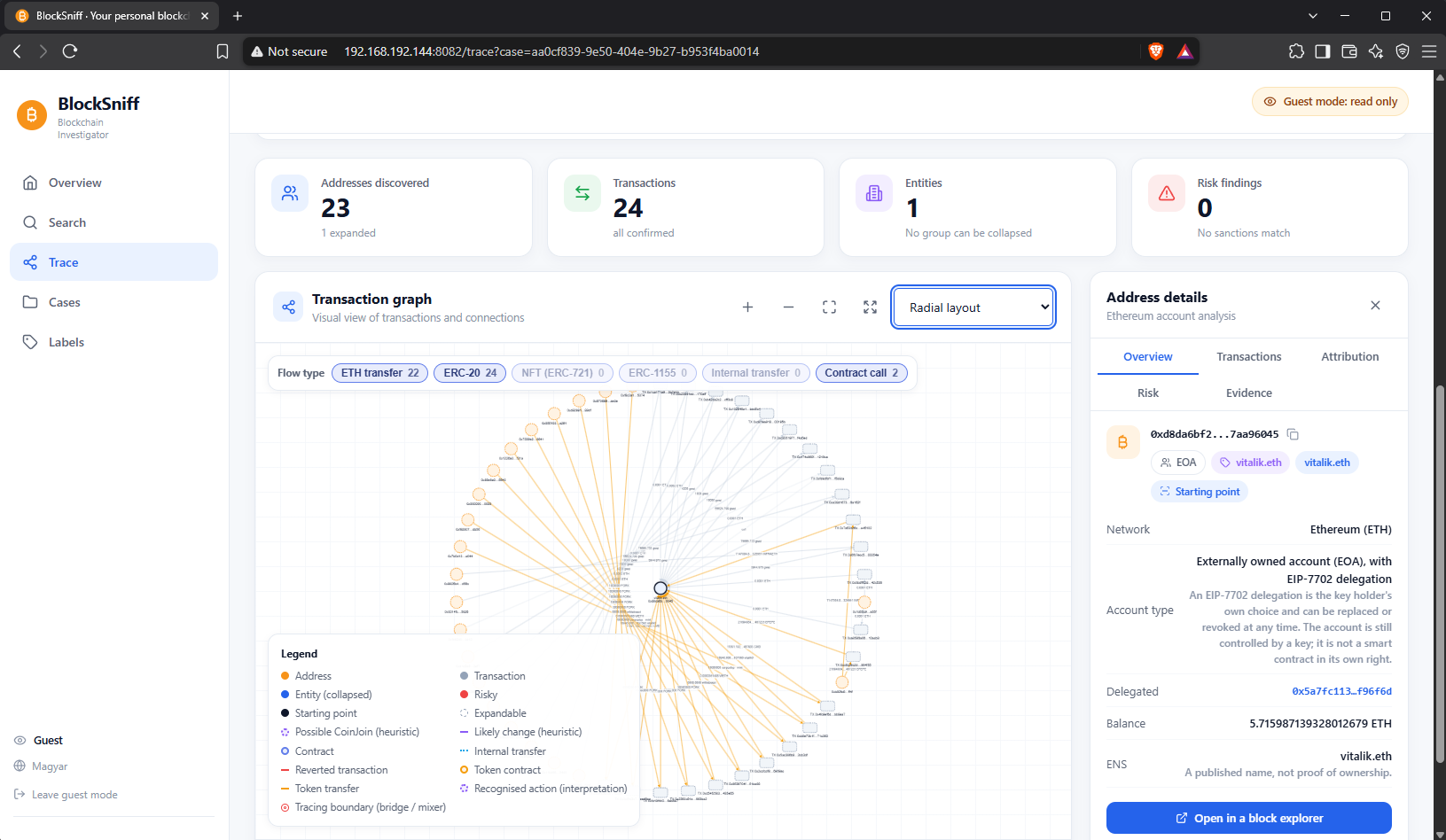
Manual blockchain investigation can require multiple block explorers, APIs and separate data sources. BlockSniff brings Bitcoin and Ethereum addresses, transactions, fund movements, entity labels and risk context into a single investigation interface.
Key features
- Investigation of Bitcoin and Ethereum addresses and transactions
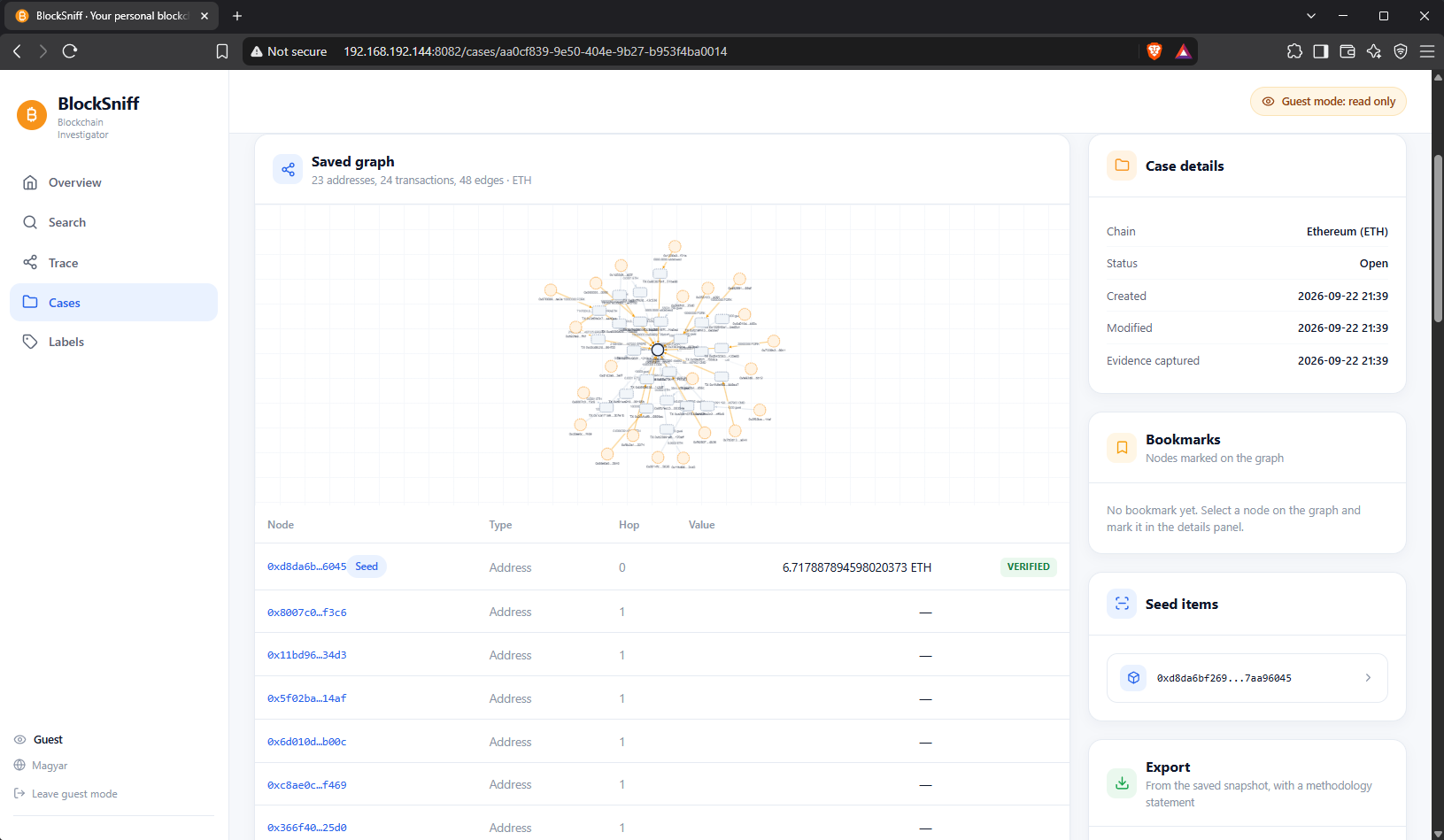
- Tracing fund-flow paths and related transaction chains
- Displaying labels associated with addresses and entities
- Support for exchange, ETF, blacklist and hack-related labels
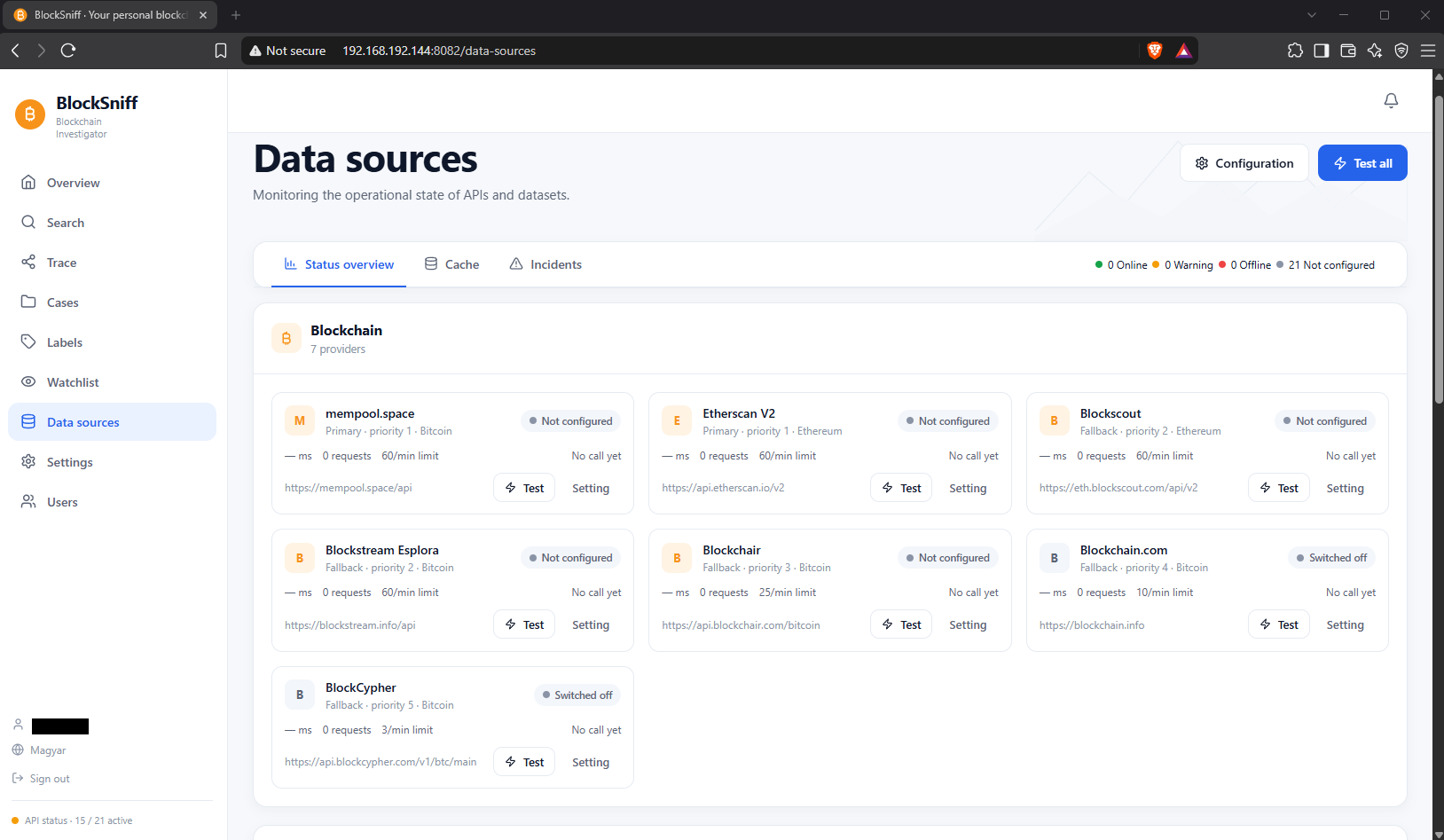
- Unified access to multiple free blockchain APIs
- API key configuration through a dedicated Settings interface
- Structured and easy-to-review presentation of investigation results
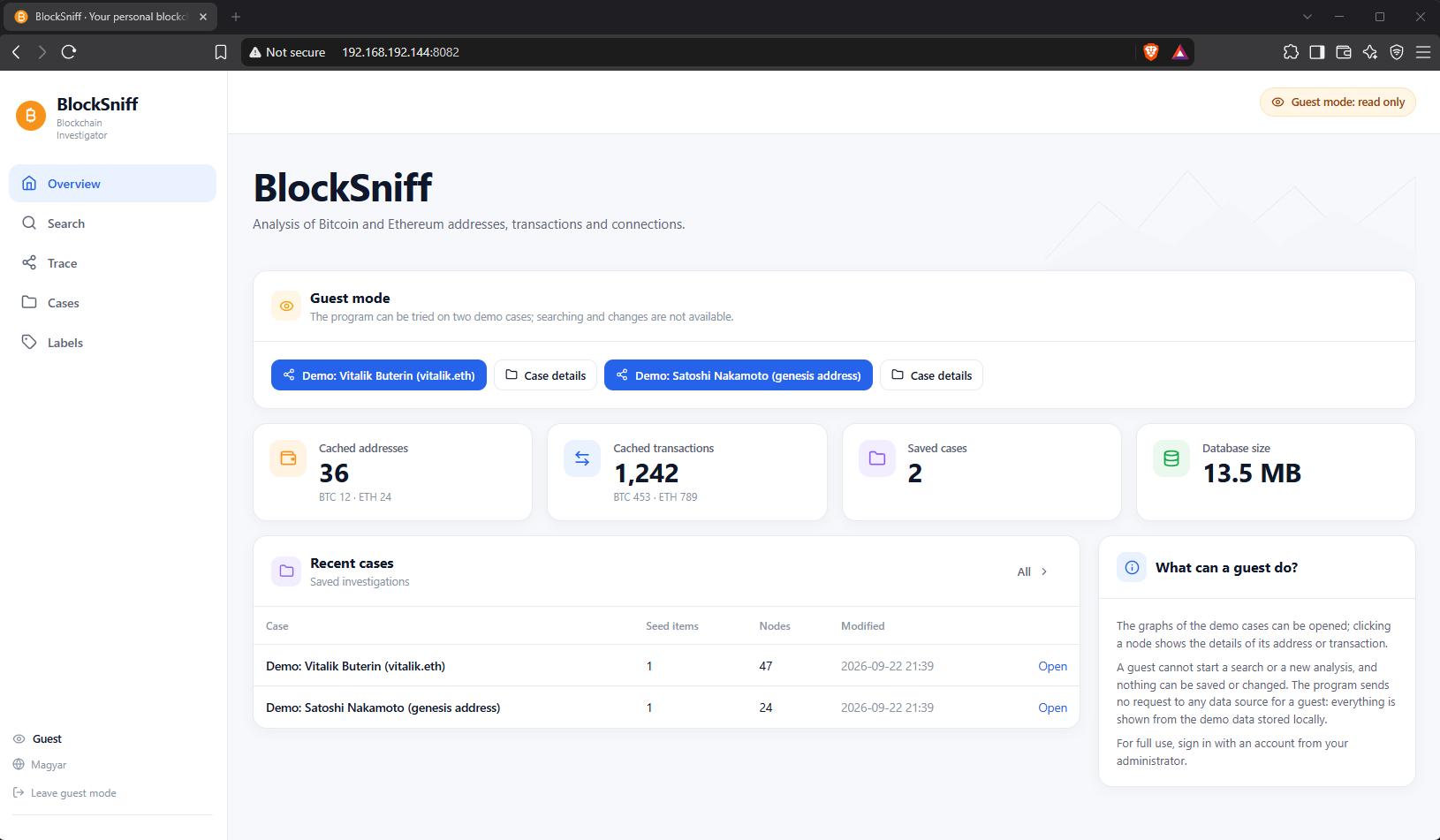
Click the image to view it in a larger size.
Technology stack
| Frontend | React + TypeScript web client with a component-based architecture and responsive investigation views |
|---|---|
| Backend | C# / .NET 10 / ASP.NET Core 10 REST API with separated blockchain-provider and analysis services |
| Data access | Entity Framework Core 10 + Npgsql |
| Database | PostgreSQL, including JSONB-based blockchain, provider and investigation data |
| Blockchain support | Bitcoin (BTC) and Ethereum (ETH) through a unified internal transaction and address model |
| API integration | Public blockchain explorer and data-provider REST APIs with provider abstraction and configurable API keys |
| Architecture | React client → ASP.NET Core REST API → provider/integration layer → PostgreSQL |
| Deployment | Ubuntu Linux, Nginx reverse proxy, Kestrel and systemd service |
How it works
The user enters a blockchain address or transaction to investigate. The system collects related transaction data from the configured providers, normalises it into a unified model, and then presents fund-flow paths together with known labels.
Engineering focus
The main engineering challenge is normalising different blockchain API formats, handling the different transaction models of Bitcoin and Ethereum, and structuring related addresses and transactions into traceable fund-flow paths.
Screenshots